30+ Sleek + Stylish Modern Bathroom Design Ideas You’ll Love!

Bathrooms are easy to neglect. They’re functional spaces, so as long as everything works, it’s tempting to just leave them be, even when the tiles are dated and the suite has seen better days. 🚿
But a good bathroom makes such a difference to your daily routine. That first shower of the morning, winding down in the bath at night, these moments feel completely different in a space that’s well designed versus one that’s cramped, cluttered, or just a bit tired.
I’ve spent a lot of time thinking about bathrooms over the years, partly because mine have never been perfect and partly because I genuinely believe this room deserves more attention than most of us give it. You don’t need a complete gut job to make a real difference. Sometimes it’s a fixture swap, a new colour palette, or just a smarter approach to storage.
We’ve pulled together 30 modern bathroom ideas across a whole range of styles and budgets, from compact ensuites to full renovation inspiration. Whatever your space, there’s something here to get you thinking. 🛁
Sleek Minimalist Master Bath

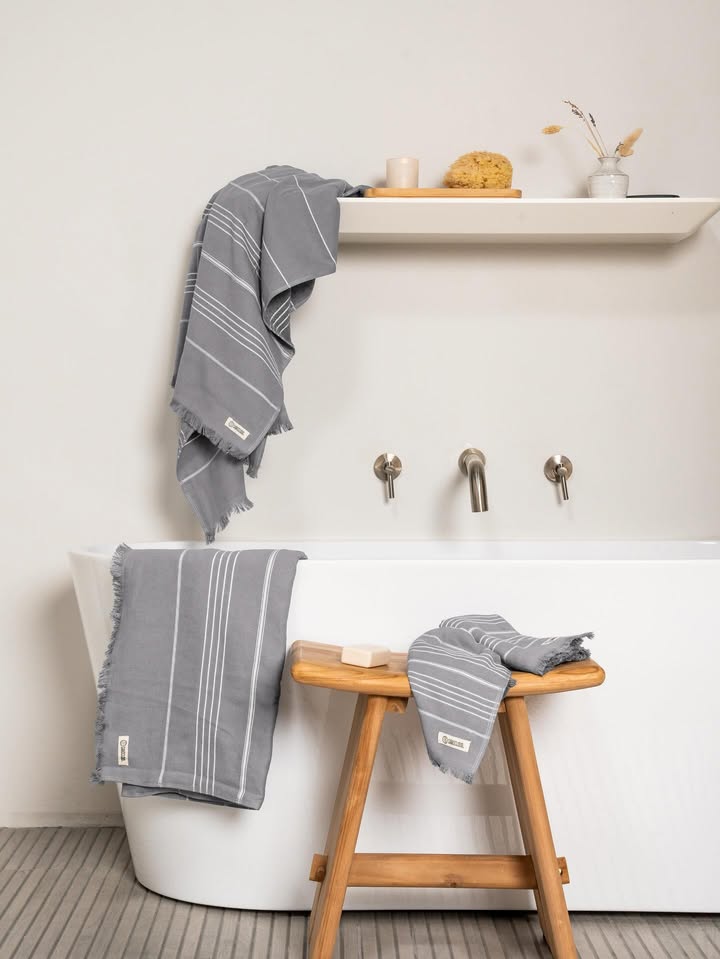
Minimalism works so well in bathrooms because the room is already stripped back by nature. You’re not fighting against furniture or decor clutter. The key is to lean into that and make every single element earn its place. A freestanding tub as a focal point, handleless cabinetry, and a limited colour palette of two or three tones is all you need to create something that feels genuinely luxurious.
To pull this off well, consistency is everything. Choose one finish for your hardware, brushed nickel, matte black, or brushed brass, and stick to it across taps, towel rails, and accessories. Mixing metals is the quickest way to undermine a minimalist scheme.
The one pitfall to watch is that minimalist bathrooms can feel cold if you strip them back too far. Introduce one warm material, a timber bath mat, a linen hand towel, a small wooden tray on the vanity, to stop the space feeling clinical.
Scandinavian Simplicity With Wood Accents

Scandi-style bathrooms have stayed popular for years because they nail something really difficult, making a functional space feel genuinely warm and inviting. The combination of white or pale grey walls with natural wood tones creates a calm that feels effortless rather than designed.
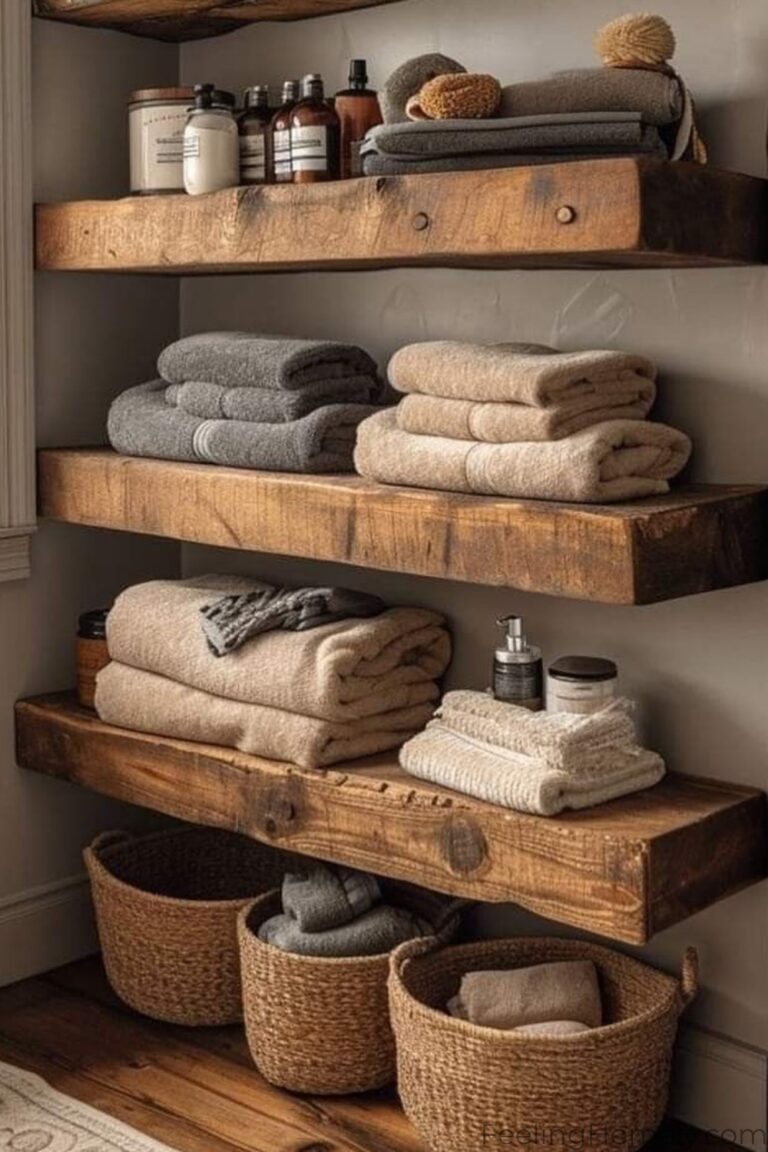
For the wood elements, look for oak or ash-effect vanity units in a light finish, and pair them with matte white tiles and simple round or rectangular mirrors. Woven baskets for storage and a wooden bath tray are inexpensive ways to bring in texture without major investment. Stick to natural fibre towels in off-white or warm grey to complete the palette.
One thing to be aware of: real wood in bathrooms needs proper sealing and ventilation to prevent warping and mould. If your bathroom has poor airflow, opt for wood-effect alternatives, porcelain wood-look tiles or moisture-resistant wood-effect vinyl, which will give you the same aesthetic without the maintenance headache.
Bold Black & White Contrast

Black and white is one of those combinations that never really goes out of style in bathrooms, and in a modern context it looks sharper than ever. The reason it works is contrast. Your eye is naturally drawn to spaces that have clear tonal definition, and a well-executed black and white bathroom always reads as intentional and confident.
For a contemporary take, pair large-format white tiles with matte black fixtures, taps, shower head, towel rails, and toilet roll holder. Keep the grout white rather than dark, which will make the space feel lighter overall. A black framed mirror or vanity unit anchors the scheme without overpowering it.
The pitfall here is going too heavy on the black in a small space. If your bathroom is compact, use black as an accent, fixtures and framing, rather than as a wall or floor colour. Reserve the bolder black surfaces for larger bathrooms where the contrast can breathe.
Monochrome Spa-Like Retreat

A tonal, single-colour bathroom, where walls, tiles, fixtures and accessories all sit within the same colour family, creates an immersive calm that’s hard to achieve any other way. It works because your eye isn’t jumping between competing elements, so the space instantly feels more restful.
Warm grey, soft stone, and warm white are the most forgiving shades to work with. Use variation in texture rather than colour to add interest, a matte wall tile paired with a gloss floor tile, or a smooth basin against a fluted wall panel. These subtle contrasts stop the scheme feeling flat.
The key consideration is lighting. A monochrome bathroom can quickly feel gloomy if the lighting is wrong. Invest in good task lighting around the mirror, ideally a backlit mirror or dedicated vanity lighting, and layer in a dimmer where possible so you can shift between a bright morning setup and a softer evening atmosphere.
Walk-In Shower With Industrial Flair

Industrial style in bathrooms is about celebrating honest materials, exposed concrete, raw steel, dark grout lines, and pairing them with functional design that doesn’t over-decorate. The result is a space that feels purposeful and confident without being cold.
To bring this look in without a full renovation, start with your shower fixtures. A black square rainfall head, exposed pipe fittings, and black channel drain make an immediate impact. Pair with large-format concrete-effect porcelain tiles, which are far more practical than actual concrete, and keep accessories minimal. A simple wooden bench or stool in the shower zone adds warmth without compromising the aesthetic.
Industrial bathrooms need strong ventilation. All those cool surfaces and open shower spaces mean humidity builds quickly, and without an extractor fan that’s up to the job, you’ll end up with condensation issues. Make sure your ventilation is sorted before anything else.
Modern Farmhouse Charm

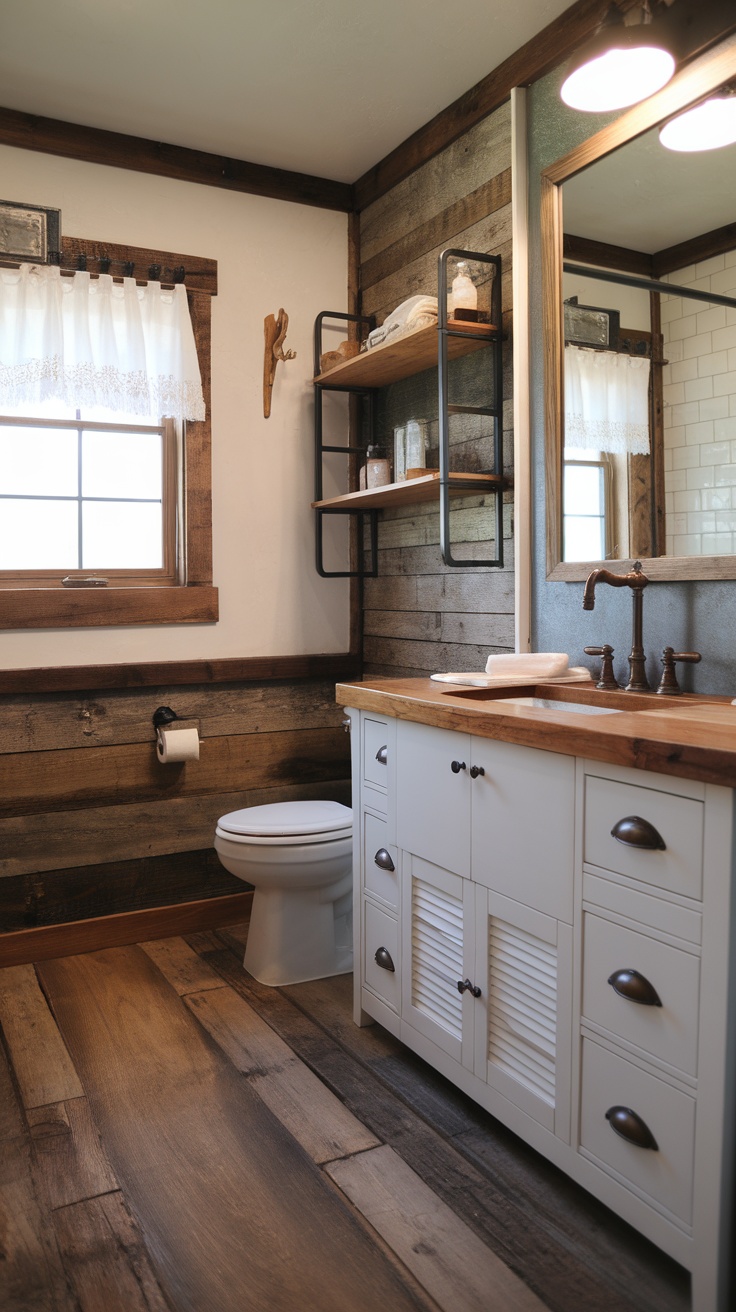
Modern farmhouse bathrooms have a quality that’s genuinely hard to put your finger on. They feel lived-in and warm without being cluttered or dated. The secret is combining the structural simplicity of contemporary design with the natural, tactile materials that give farmhouse style its personality.
Work with a palette of warm whites, soft creams, and natural wood tones. A shaker-style vanity unit is the cornerstone of this look, pair it with a ceramic basin, brushed brass or aged bronze taps, and a round or rectangular wooden-framed mirror. Open shelving rather than upper cabinets keeps the feel relaxed rather than fitted-kitchen formal.
Resist the urge to over-style. Farmhouse bathrooms look best when they feel slightly casual, a few glass jars for cotton balls and buds, a simple woven basket for towels, a small plant on the windowsill. The moment it starts looking like a show home, it loses the charm that makes this style work.
Floating Vanity Elegance

Floating vanities have become a staple of modern bathroom design for good reason. They instantly make a room feel more spacious by keeping the floor clear, and they give the space a clean, architectural quality that floor-standing units rarely achieve.
Opt for a wall-hung unit with push-to-open doors rather than handles for the sleekest look. Pair with an integrated or under-mounted basin to keep the lines unbroken. Under-lighting, a simple LED strip beneath the unit, is an affordable addition that looks stunning and helps the vanity appear to float even more dramatically.
Before committing to a floating vanity, check that your wall can take the load. They need to be fixed into solid masonry or a reinforced stud wall. A standard plasterboard wall won’t be sufficient, and this is worth confirming with a tradesperson before you purchase the unit.
Compact & Clever Layout

Small bathrooms are one of the most satisfying design challenges because every decision genuinely matters. Getting the layout right in a compact space is less about choosing nice tiles and more about understanding how people actually move through the room and designing around that.
Wall-hung fixtures are your best friend in a small bathroom. A wall-mounted toilet with a concealed cistern, a wall-hung vanity, and a fixed glass shower screen rather than a shower curtain all free up floor space and make the room easier to clean. Recessed shelving in the shower, built into the wall rather than added on, eliminates protrusions that make small rooms feel cramped.
When it comes to tiles, bigger is often better in compact bathrooms. Large-format tiles have fewer grout lines, which creates a calmer visual field and makes the room feel less chopped up. A single tile used on both walls and floor, run continuously, is a particularly effective trick for making a small bathroom feel cohesive and spacious.
Natural Tones + Textures

There’s a reason natural, earthy bathrooms have resonated so strongly over the past few years. After a long stretch of stark white and grey interiors, people are craving warmth and organic character. Bringing natural tones and textures into a bathroom creates a space that feels genuinely restorative.
Build your palette around warm neutrals, sand, terracotta, warm stone, and sage, and bring in texture through material choice rather than pattern. Zellige tiles have a beautiful handmade quality. Limewash paint on a feature wall adds depth. Rattan, jute, and linen accessories complete the look without cluttering the space.
Plants are non-negotiable in this style, but choose varieties suited to the bathroom environment. Peace lilies, ferns, pothos, and spider plants all handle humidity well and genuinely thrive in bathrooms. Avoid anything that needs direct sunlight if your bathroom is north-facing or windowless.
Marble And Gold Luxe

Marble and gold is one of those combinations that could easily veer into overblown territory, but when it’s handled with restraint it’s genuinely one of the most beautiful looks a bathroom can have. The key is treating the marble as the hero and letting the gold play a supporting role.
Use marble, or high-quality marble-effect porcelain which is more practical and far more affordable, on a feature wall, the vanity top, or the floor. Then bring in brushed gold through fixtures only: taps, shower fittings, towel rails, and light fittings. Keep everything else clean and simple, white walls and minimal accessories, so the marble and gold read clearly rather than competing with other elements.
Genuine marble needs sealing on installation and resealing periodically to prevent staining. In a bathroom where water and products are constantly in use, this is easy to neglect. Marble-effect porcelain gives you the same visual result with none of the maintenance, which is why it’s become the go-to for most design-conscious homeowners.
Concrete & Wood Combo

Concrete and wood is a pairing that works because the two materials balance each other perfectly. Concrete brings an architectural coolness and solidity, while wood softens that edge with warmth and natural character. Together they create a bathroom that feels considered and contemporary without being cold.
Concrete-effect tiles are the most practical way to achieve this look. They require no sealing, are incredibly durable, and now come in formats ranging from small mosaics to large slabs. Pair with a timber-effect vanity unit, a wooden bath caddy, or open oak shelving for the wood element. Brushed metal fixtures in gunmetal or dark bronze tie the two materials together well.
The one balance to get right is proportion. If you go heavy on the concrete, floor, walls, and ceiling, the wood needs to match that scale. A small wooden shelf won’t offset a fully concrete-tiled room. Make sure whichever material you choose as the lead has enough presence to own the space.
Glass Wall Luxury Ensuite

A glass wall or full-height glass partition between a bedroom and ensuite is one of those features that looks genuinely architectural and makes a relatively ordinary room feel like a high-end hotel. The effect comes from the sense of openness it creates. The two spaces borrow light and volume from each other.
Frameless or slim-framed glass panels give the cleanest result. If privacy is a concern, switchable smart glass, which transitions from clear to frosted at the touch of a button, is increasingly affordable and works beautifully in this context. Alternatively, fluted or reeded glass gives privacy without blocking light and has a beautiful decorative quality of its own.
This kind of feature works best when the bathroom itself is well designed enough to be on show. If you’re considering a glass partition, think about the ensuite as a space that will be seen from the bedroom. Storage needs to be genuinely hidden, the palette needs to be cohesive with the bedroom, and clutter needs to be managed.
Zen Bathroom With Indoor Plants

A Zen bathroom isn’t really about a specific style. It’s about an approach to the space that prioritises calm over statement. The goal is a room that asks nothing of you visually, where every element feels purposeful and nothing feels cluttered or hurried.
Natural materials are essential here, wood, stone, linen, ceramic. Keep the colour palette to three tones at most, all from the same warm or cool family. Indirect lighting, behind a mirror, under a vanity, or recessed into the ceiling, creates a much more restful atmosphere than a central overhead light. A few well-placed plants in varieties that love humidity make the whole room feel alive without adding visual noise.
The thing people often get wrong with Zen-inspired bathrooms is buying beautiful products and then having nowhere to put them, so they end up on show and the whole effect is ruined. Storage is actually the foundation of this look. Solve the storage first, then add the styling.
Arched Mirrors & Soft Lighting

Arched mirrors have had a real moment over the past couple of years, and they’ve earned it. The curved top softens a bathroom full of hard lines and right angles, and brings in a subtle architectural reference that feels timeless rather than trendy.
A single large arch mirror above a vanity is the most impactful way to use this style. Look for options with a thin metal frame in brushed brass, black, or brushed nickel to complement your fixtures. For lighting, position a simple wall light on either side of the mirror rather than above it. This gives far more flattering and even light for everyday use than a ceiling-mounted fitting.
Be mindful of scale. An arched mirror that’s too small for the vanity looks apologetic rather than intentional. As a rule, aim for a mirror that’s roughly the same width as your basin or vanity unit, or slightly narrower, never wider.
Japandi Fusion Feel

Japandi, the blend of Japanese minimalism and Scandinavian warmth, is one of those design philosophies that translates particularly well to bathrooms because both traditions share a deep respect for thoughtful, uncluttered spaces. The result is a bathroom that feels both simple and deeply considered.
The Japandi palette is built on warm neutrals, off-white, warm grey, clay, sage, with natural wood as the primary material accent. Think a light oak vanity, linen towels, a ceramic soap dish with an organic shape, and a single sculptural plant. Everything should feel handmade and considered rather than mass-produced and generic.
Japandi design demands restraint, which is harder than it sounds. The temptation when you love this aesthetic is to buy beautiful objects and display them, but the style actually works by leaving space intentionally empty. If every surface has something on it, the calm dissolves. Edit ruthlessly.
Retro-Modern Revival

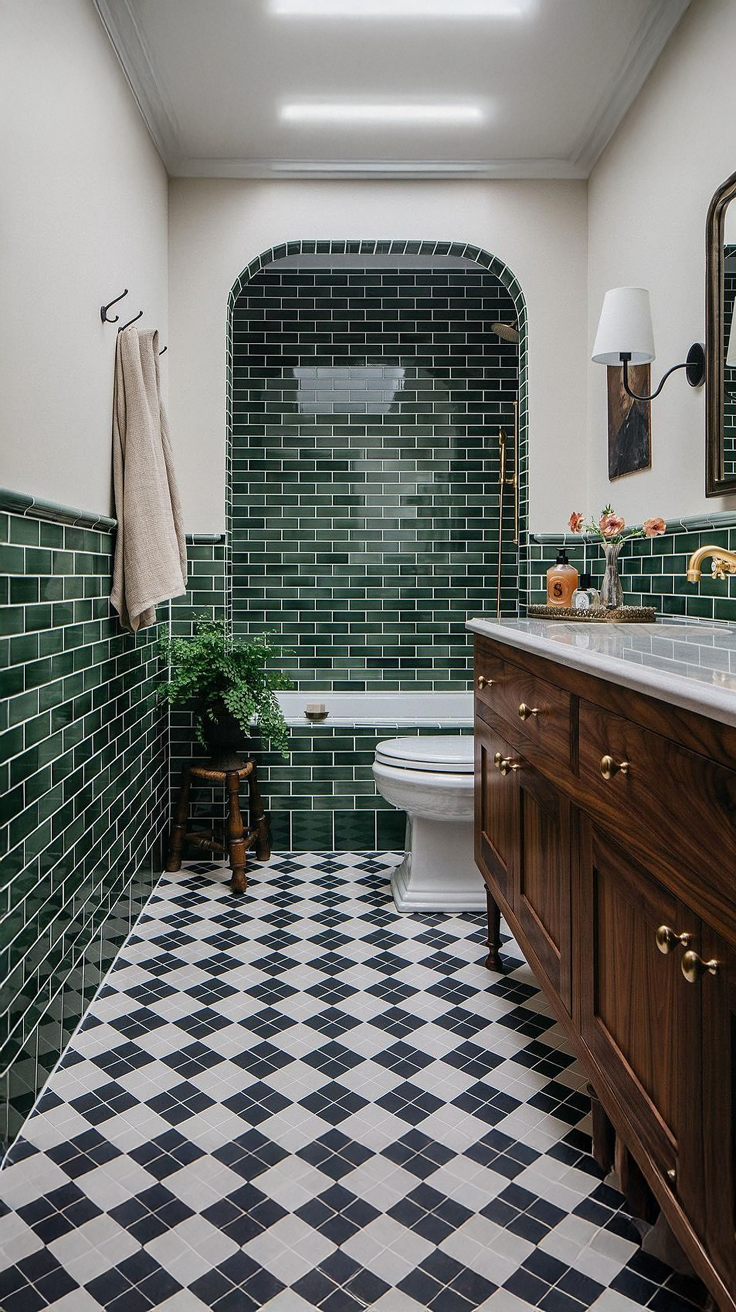
Retro-modern bathrooms are enjoying a genuine comeback, and it’s not hard to see why. After years of cool greys and stark whites, the warmth and personality of vintage-inspired design feels refreshing. The key is referencing retro without recreating it wholesale.
Soft pastel tiles in sage, dusky pink, warm cream, or powder blue are the foundation of this look. Pair with brass or antique brass fixtures, a freestanding or roll-top bath if space allows, and simple open shelving rather than built-in cabinetry. A small ceramic or wicker stool and some vintage-style prints complete the picture without overdoing it.
The pitfall with retro-inspired bathrooms is tipping from charming into themed. Keep the proportions modern, large-format tiles work even in a retro palette, and resist the urge to add too many vintage accessories. One or two genuine vintage or vintage-inspired pieces have far more impact than a room full of them.
Shower Niche Perfection

A shower niche, a recessed shelf built directly into the shower wall, is one of those practical features that also has a significant impact on how polished and finished a shower looks. Bottles and products lined up in a niche look intentional; the same products balanced on the edge of the shower tray look like an afterthought.
Plan niches at the design stage, not as an afterthought. A horizontal niche at mid-height, roughly shoulder height, is the most practical for everyday products. A lower niche at knee height works well for shaving or foot-care products. Tile the interior of the niche in a contrasting tile or a mosaic to give it definition and make it a feature rather than just a slot in the wall.
Make sure niches are positioned between studs rather than through them, and that the waterproofing membrane is applied inside the niche as well as on the surrounding wall. A niche that isn’t properly waterproofed will cause damp problems inside the wall that are expensive to fix.
Black Framed Glass Partition

Black framed glass is one of the most versatile design moves in a modern bathroom. It works across styles from industrial to Japandi to classic contemporary, and it gives a shower enclosure a sense of structure and intentionality that frameless glass sometimes lacks.
Slim black steel or aluminium profiles look most refined. Pair with matching black fixtures throughout, taps, shower head, towel rail, toilet roll holder, so the black framing reads as a deliberate design choice rather than an isolated element. The glass panels themselves should be clear rather than tinted to keep the space feeling light and open.
Maintenance is worth thinking about. Black frames show limescale and water marks more readily than chrome or brushed finishes, particularly in hard water areas. A daily squeegee habit and a weekly wipe-down with a limescale remover will keep black frames looking sharp. Without it they can quickly look grubby.
Small Bathroom, Big Design

A small bathroom with strong design thinking will always outperform a large bathroom that hasn’t been properly considered. The constraint of a small space forces you to be decisive, and decisive design is almost always more interesting than vague design.
Go tall rather than wide. Floor-to-ceiling tiles visually stretch the height of a small bathroom and make it feel more generous. A tall, slim mirror does the same. Use recessed lighting rather than pendant or surface-mounted fittings, which take up visual space. Keep the floor clear with wall-hung fixtures wherever possible.
Avoid the temptation to use a lot of different materials and colours in a small bathroom in an attempt to add interest. In a compact space, complexity reads as clutter. Pick one tile, one fixture finish, and one accent material, and commit to them throughout. The cohesion will make the room feel far larger than a busy mix ever would.
Curbless Walk-In Shower

A curbless or level-access shower, where the shower floor sits flush with the bathroom floor with no step or raised tray, changes the feel of a bathroom completely. The visual continuity of a single floor surface running from one end of the room to the other is one of the most effective ways to make any bathroom feel larger and more luxurious.
For this to work properly, the floor needs a very slight gradient towards the drain, typically around 1-2%, to direct water flow. A linear drain positioned along one wall or at the far end of the shower zone looks far sleeker than a central drain and gives you more flexibility with tile layout. Use the same tile throughout the wet and dry zones for maximum visual impact.
The key consideration here is that curbless showers must be designed and installed precisely. Poor gradients mean water migrates outside the shower zone, and once the floor is tiled, this is an expensive problem to fix. This is one job where cutting corners on a professional installer will cost you more in the long run.
Statement Wall With Geometric Tiles

A geometric tile feature wall is one of the most effective ways to introduce pattern and personality into a bathroom without committing to a full pattern throughout. One bold wall, typically behind the bath, behind the vanity, or as a shower backdrop, does all the work while the rest of the room stays calm and simple.
Hexagon, chevron, herringbone, and encaustic-effect tiles all work brilliantly in this context. For a modern feel, choose a geometric tile in a muted tone, dusty terracotta, warm sage, charcoal, rather than a strong primary colour, which can quickly feel dated. The pattern gives you the interest without the colour doing too much.
Grout choice is critical with geometric tiles. A contrasting grout emphasises the pattern and gives a bold, graphic result, great for statement looks. A tonal or matching grout softens the pattern and gives a more subtle, sophisticated effect. Think about which result you actually want before you grout, because it’s very hard to change.
Crisp White With Wood Contrast

White and wood is probably the most enduringly popular bathroom combination for good reason. It’s clean, warm, and works with almost any style from Scandi to farmhouse to contemporary. The trick is in the specific shades and proportions you choose.
Crisp, cool white tiles and walls need a warm wood tone to stop the space feeling clinical. Think medium oak, warm walnut, or light ash rather than grey-toned or very pale woods. A wooden ladder shelf, open timber shelving, or a wood-effect vanity unit all work well. Keep other accessories white or neutral so the wood reads clearly.
The proportion of wood to white matters. In a mostly white bathroom, the wood elements should feel like considered accents rather than an afterthought. If there isn’t quite enough wood to make an impact, add it in layers, a wooden bath tray, a teak bath mat, a small wooden tray on the vanity, until the balance feels right.
Hidden Storage Design

A bathroom with genuinely good hidden storage is one of the great unsung luxuries. The difference between a bathroom where everything has a home and one where products and accessories live permanently on display is enormous, and it’s not about minimalism for its own sake, it’s about the calm that comes from visual order.
Recessed medicine cabinets built flush into the wall, vanity units with pull-out drawers rather than open shelves, and mirrored cabinets that look like part of the wall are all approaches worth considering. If your bathroom has a bath panel, a hinged or removable panel gives you access to useful storage space underneath. In the shower, a niche keeps products stored but still accessible.
The pitfall is underestimating how much storage you actually need. It’s worth auditing everything that currently lives in your bathroom before you design storage, products, medicines, cleaning supplies, spare towels, toilet paper, and designing for the actual volume rather than an idealised, minimal version of your habits.
Double Vanity Symmetry

A double vanity is one of those features that sounds like a pure luxury but quickly becomes a genuine practical necessity once you’ve lived with one. Two sinks, two mirrors, two sets of storage. For couples or families, the morning routine becomes a completely different experience.
Symmetry is what makes a double vanity look intentional rather than just wide. Matching round or rectangular basins, identical taps, and matching mirrors or a single large mirror spanning both sinks give the arrangement a hotel-suite quality. Keep towel rails and accessories balanced on either side to maintain the symmetry.
The minimum width for a double vanity that actually works comfortably is around 120cm. Less than this and it becomes a squeeze rather than a luxury. If you’re considering a double vanity in a smaller bathroom, measure carefully and make sure the sinks have at least 60cm of width each before committing.
Warm Lighting With Cool Surfaces

The combination of warm lighting with cool surfaces, think polished stone, large-format grey tiles, or concrete-effect porcelain, creates a tension that’s actually incredibly appealing in a bathroom. The surfaces give the space architectural weight and clarity, while the warm light makes it feel welcoming rather than austere.
Layer your lighting across at least three sources: ambient lighting from recessed ceiling lights or a central fitting, task lighting around the mirror for grooming, and accent lighting from under-vanity LEDs, backlit shelving, or a freestanding lamp if space allows. This layering is what separates a bathroom that feels designed from one that just has a light in the ceiling.
Bulb temperature makes a significant difference in how bathroom surfaces read. A warm white bulb at around 2700K will warm up cool grey and stone surfaces and make skin tones look healthy. A cool white bulb at 4000K or above tends to make bathrooms feel clinical and can make cool surfaces feel even colder. Avoid it unless you’re after a deliberately sharp, contemporary effect.
Tiled Wet Room Perfection

A wet room, a fully tiled, fully waterproofed bathroom where the shower area is open to the room with no enclosure, represents the most uncompromising end of modern bathroom design. When it’s done well, it feels extraordinary. When it’s done poorly, it’s one of the most expensive bathroom mistakes you can make.
The foundation of a good wet room is the tanking, the waterproofing membrane that’s applied to every surface before tiling. This needs to be done by someone who knows what they’re doing, because any gaps or weak points will allow water into the structure and cause serious damage over time. Don’t cut costs on the waterproofing stage.
For the tiles, a single large-format tile throughout, floor and walls, is the cleanest approach and creates that seamless spa quality. A matt or textured floor tile is essential for slip resistance, particularly in a space where the entire floor gets wet. A linear drain positioned flush with the wall and tiled over so it’s almost invisible is the finishing touch that separates a professional wet room from an amateur one.
Textured Feature Wall

A textured feature wall introduces the one thing that a flat-tiled bathroom often lacks, depth and tactility. When you can see and almost feel the surface of a wall, the room gains a richness that smooth surfaces simply can’t match.
Fluted tiles are currently one of the most popular choices for this. Their vertical channels catch light in a way that changes throughout the day, giving the wall a sculptural quality. Zellige tiles, with their slightly uneven handmade surface, have a similar effect. Stone-effect tiles with a 3D relief surface are another option that works particularly well as a bath backdrop or shower feature wall.
Match the texture to the scale of your bathroom. In a small bathroom, a heavily textured tile can feel overwhelming, so go for something with subtle relief rather than a deeply structured surface. In a larger bathroom you can be bolder. And remember that textured tiles are harder to clean than smooth ones, so factor that into your decision if you value low-maintenance surfaces.
Elegant Matte Finishes

Matte finishes have shifted from a niche design choice to a genuine mainstream preference, and with good reason. There’s a softness and depth to matte surfaces that gloss simply doesn’t have. They absorb light rather than reflecting it, which creates a calmer, more considered atmosphere.
Matte tiles work particularly well on walls in soft neutrals, warm white, stone, clay, sage. For floors, a matte or semi-matte finish is actually more practical than gloss because it’s less slippery when wet and shows fewer footprints and watermarks. Matte black or brushed fixtures are the natural companion to matte tiles and look considerably more refined than standard chrome in this context.
The one thing to be aware of is that some matte tiles, particularly darker colours, can be harder to keep clean because certain cleaning products leave a residue or slight sheen. Test your cleaning product on a spare tile before committing, and always use a pH-neutral cleaner on matte porcelain to maintain the finish.
Herringbone Highlight Wall

Herringbone is one of those tile patterns that manages to feel both classic and contemporary at the same time. It has enough history to feel timeless, but the dynamic, directional quality of the pattern keeps it feeling alive and current. Used as a single feature wall, it’s one of the most impactful tile choices you can make.
It works in virtually any tile format, subway tiles in a white or coloured glaze, marble or marble-effect rectangles, slim pencil tiles in a metallic finish, or bold colour in a matte ceramic. The pattern does the work regardless of the tile choice. For a modern bathroom, a large-format herringbone in a single colour keeps it sophisticated; for something with more character, a two-tone herringbone adds real drama.
Herringbone requires more tiles than a standard horizontal or vertical layout due to cutting waste at the edges. Budget for around 15% extra material. It also takes more skill and time to lay correctly, so if you’re hiring a tiler, make sure they’ve done herringbone before. A badly laid herringbone pattern is immediately obvious.
Freestanding Tub With A View

A freestanding bath is the ultimate centrepiece in a bathroom. It makes a statement in a way that a built-in bath simply cannot, and it positions bathing as an experience worth making space for rather than just a functional necessity.
Placement is everything with a freestanding tub. The most common mistake is pushing it against a wall to save space, which immediately defeats the purpose. A freestanding bath needs to be accessible from at least three sides to feel like the luxurious focal point it’s meant to be. If you have a window, positioning the tub to face it transforms the bathing experience entirely. If you have a beautiful floor tile, let the tub float on it.
Floor-mounted freestanding taps are the correct pairing for a freestanding bath, but they need to be positioned carefully. The spout needs to reach comfortably over the rim without stretching, and the waste and overflow need to align with the bath’s fittings. This is worth checking with your plumber before you purchase either the bath or the taps, because mismatched positioning is a surprisingly common and frustrating mistake.
Every bathroom on this list starts with the same principle: the best bathroom design isn’t the most expensive or the most dramatic, it’s the one that fits how you actually live. The morning routine that used to feel rushed, the evening bath that finally feels like a treat, the small daily moments that a well-designed space makes genuinely better.
Start with what bothers you most about your current bathroom. Is it the storage? The lighting? The dated tiles? Fix that first, and everything else will follow. You don’t need to do it all at once, and you don’t need a huge budget to make a real difference.
I hope something here has given you the spark you were looking for, whether it’s a full renovation or just one small change that makes your bathroom feel like yours again.
– Lexi x 🤍