The Flooring Trends I’m Seeing Everywhere for 2026 (And What I’d Actually Put in My Own Home)

There’s something about flooring that people underestimate.
We’ll obsess over paint swatches. We’ll save sofas for months. We’ll debate cabinet handles like it’s a life decision. But the floor? It quietly holds the entire mood of a home together.
And this year especially, I’ve noticed something shift.
The 2026 flooring trends aren’t about chasing statements or copying show homes. They’re about warmth. Texture. Longevity. And homes that feel lived in, not staged.
If you’re renovating, building, refreshing a room, or even just dreaming about it with a cup of coffee in hand, these are the flooring trends I’m seeing rise for 2026 and what I honestly think is worth investing in.
Warm Wood Is Replacing Cool Grey
For years we lived in the era of cool-toned grey floors.
Grey laminate. Grey LVT. Grey engineered wood. It felt modern at the time. Clean. Crisp. But in 2026, I’m seeing a strong move back toward warmth.
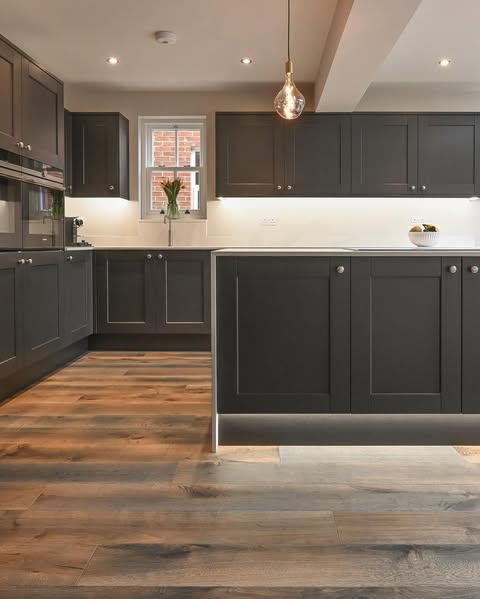
Think honey oak. Soft walnut. Natural mid-tone timber. Even subtle golden undertones are returning.
And I completely understand why.
Warm wood instantly makes a space feel grounded and welcoming. It works beautifully with the cosy neutral paint colours that are trending now. It softens kitchens. It warms up open-plan spaces. It makes white walls feel intentional instead of cold.
If I were choosing flooring right now for a family home, I would lean toward a natural oak tone with visible grain. Something that feels authentic, not plastic-smooth.
The key difference for 2026 is that we’re not going orange. We’re going natural. Earthy. Understated.
And that subtle shift changes everything.
Wide Planks Are Becoming the New Standard
One of the biggest visual upgrades I’ve seen recently is wider planks.
They make a room feel calmer. More expansive. Less busy.
Narrow strips can sometimes create visual noise, especially in open-plan layouts. Wide planks, on the other hand, feel architectural. Thoughtful. Grown up.
In smaller homes especially, wide plank flooring can make the space feel larger because there are fewer seams breaking up the room visually.
It’s a small detail that makes a surprisingly big difference.
If you’re updating flooring in a hallway, living room or open-plan kitchen-diner, this is one of the easiest ways to make the result feel high-end without actually changing the rest of the design.

Herringbone Is Staying — But It’s Softer
Herringbone isn’t disappearing in 2026. But it is evolving.
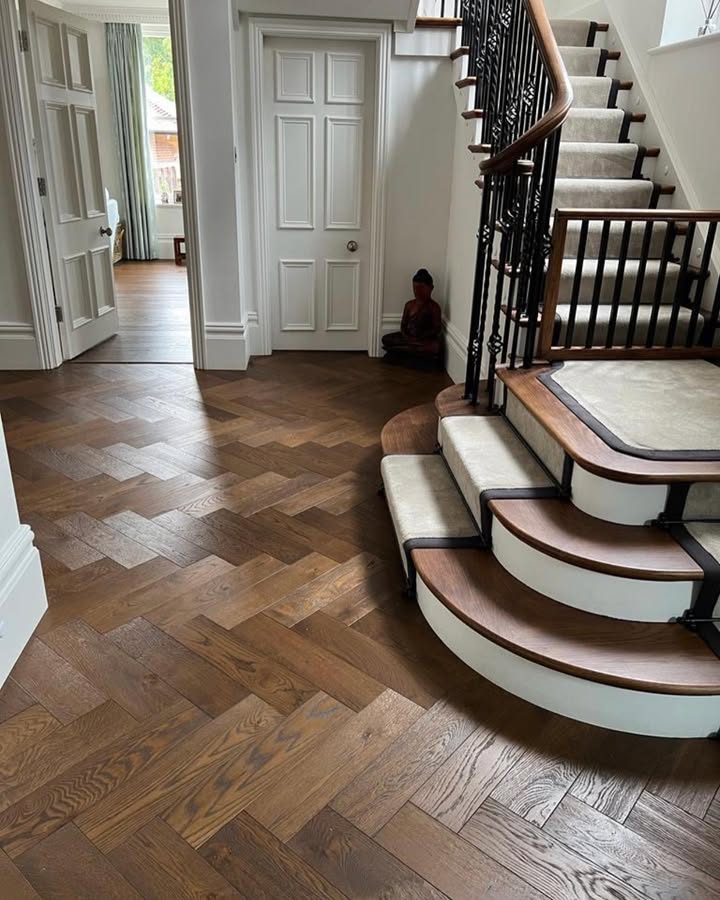
Instead of high-contrast, dark-edged, dramatic parquet, I’m seeing softer, more tonal herringbone patterns. Subtle variation. Natural wood. Gentle movement.
It feels less “look at me” and more “this has always been here.”
And that’s the direction homes are heading.
We want character, but we don’t want gimmicks.
If you love herringbone, don’t panic. Just think softer colour contrasts. Less grey. More warmth. And make sure the pattern complements the room rather than dominating it.
Stone and Limestone Looks Are Gaining Popularity
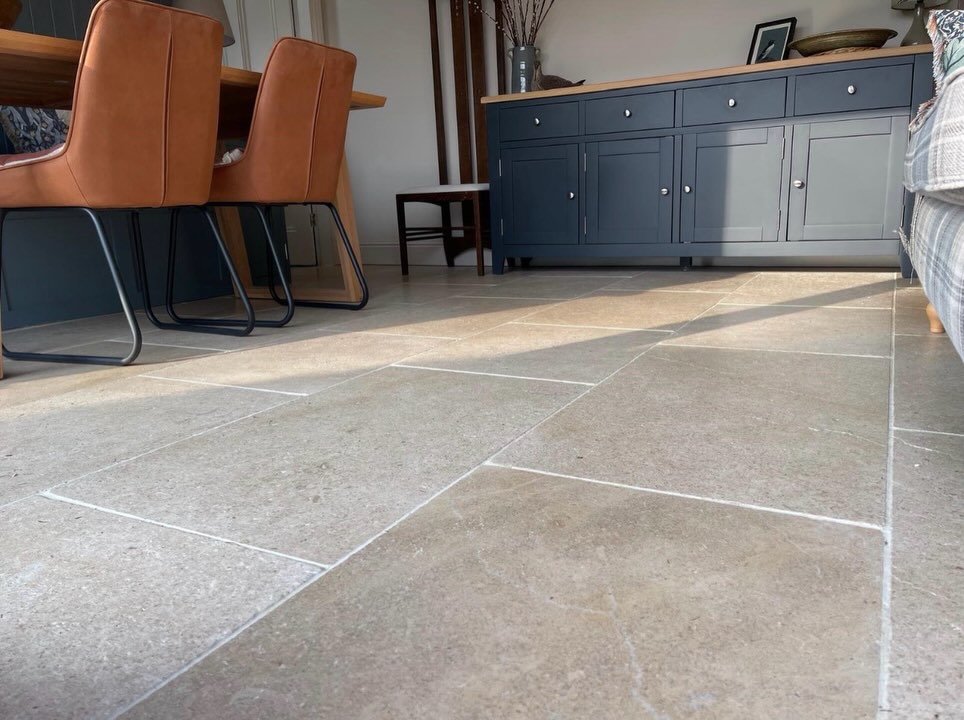
There’s something beautifully calming about stone-look flooring.
Soft limestone tones. Subtle texture. Gentle variation.
It’s especially popular in kitchens and open-plan living areas where people want a light, airy feel without going stark white.
In 2026, these stone-inspired finishes feel warmer than they did before. Less polished marble. More organic. More earthy.
The beauty of stone-look LVT or porcelain tiles now is how realistic they’ve become. You get the aesthetic without the cold feel underfoot, especially if you combine it with underfloor heating.
And for busy households, it’s practical. Durable. Forgiving.
For homes with lots of natural light, this trend works beautifully because the subtle tonal shifts in the floor catch the light in a way that feels soft rather than glossy.

Natural Texture Is Everything
One thing I’m noticing across all flooring types is texture.
Perfectly smooth finishes are fading slightly in favour of subtle grain, brushed effects, and gentle surface variation.
It adds depth without overwhelming the space.
Texture also makes flooring more forgiving. It hides everyday life. Paw prints. Kids running in from the garden. The small scuffs that inevitably happen in a real home.
And that’s important.
In 2026, flooring isn’t about perfection. It’s about resilience and comfort.
Seamless Open-Plan Flooring
Open-plan living is still hugely popular, but the way we’re flooring those spaces is becoming more intentional.
Instead of breaking up rooms with different materials, more homeowners are choosing one continuous flooring type throughout the entire ground floor.
It creates flow. It makes the space feel larger. It feels cohesive.
If you’re working with an open-plan kitchen-diner-living space, continuity is one of the most impactful decisions you can make.
The key is choosing something neutral enough to carry through multiple zones, but warm enough to stop the space feeling flat.
Sustainable Choices Are No Longer Optional
Sustainability isn’t a niche trend anymore. It’s becoming an expectation.
More people are asking where their wood is sourced from. Whether materials are recyclable. Whether manufacturing processes are responsible.
Engineered wood with certified timber, recycled content flooring, and durable materials designed to last are becoming more attractive than fast, disposable options.
And honestly, I love this shift.
When you invest in flooring, you’re investing for years. Sometimes decades. It should be something you feel good about long term.
Soft, Earthy Colour Palettes
We’re moving away from extremes.
No more ultra-dark dramatic floors dominating every room. No more icy pale tones that feel clinical.
The 2026 palette sits comfortably in the middle.
Warm oak. Light walnut. Soft taupe stone. Muted clay tones. Gentle beige with depth.
These shades pair beautifully with the paint colours I’m seeing trend as well, like creamy whites, warm greige, soft sage, and muted terracotta.
Everything feels cohesive. Calmer. More considered.
Comfort Is Just as Important as Style
One of the biggest mindset changes I’ve noticed recently is that people are prioritising how flooring feels, not just how it looks.
Underfoot warmth. Noise reduction. Softness. Practicality.
Especially in family homes, that matters.
Luxury vinyl tiles with cushioned backing, underfloor heating under porcelain, and quality underlay under engineered wood are becoming standard considerations rather than afterthoughts.
Because beautiful homes should feel comfortable to live in, not just nice to photograph.
What I’d Actually Choose in My Own Home
If I were choosing flooring today for a full ground-floor renovation, here’s what I would lean toward.
A warm, natural oak engineered wood in wide planks. Slightly brushed texture. Matte finish. Nothing glossy.
I’d carry it through the hallway, kitchen, dining space, and living area to create flow.
In bathrooms, I’d choose a soft limestone-look porcelain tile with subtle warmth rather than cool grey.
And I’d avoid anything too trendy that I might tire of in three years.
Because flooring isn’t like cushions. It’s not a seasonal swap.
It’s the foundation.
And in 2026, that foundation is all about warmth, texture, and longevity.
Homes are becoming softer. Calmer. More welcoming.
And our floors are finally reflecting that.
If you’re planning a refresh this year, take your time. Order samples. Look at them in morning light and evening light. See how they feel under your feet.
Because when the floor feels right, the whole home feels right.
– Lexi x