how to Reupholster and Refoam an Old Sofa (And Make It Feel Brand New Again)

There’s something really special about bringing old furniture back to life.
Our sofa has seen everything. Movie nights with snacks everywhere, lazy Sundays under blankets, the odd accidental nap that turns into a full sleep. It’s where we pile up after long days and where the kids somehow always end up bouncing, even when they’re not supposed to.
But over time, you start to notice it. The cushions don’t bounce back like they used to. The fabric looks a little tired. The whole thing feels… flat. Not broken. Just worn.
I stood there at one point thinking, do we replace it? And then I thought about the cost. And the waste. And honestly, I didn’t want to lose the sofa that held all those memories.
So I decided to fix it instead.
Reupholstering and refoaming sounds like one of those “proper DIY people only” projects. I definitely felt that at first. But once I got into it, I realised it’s just a series of manageable steps. Take photos. Take your time. Replace what’s worn. Pull the fabric tight. It’s more patience than genius.
And I can honestly say, it’s one of the most satisfying home projects I’ve done. Seeing it go from saggy and tired to firm, fresh and completely transformed felt brilliant.
In this guide, I’ll walk you through exactly how I did it. How to choose the right foam and fabric without overcomplicating it. How to strip your sofa safely. How to replace the padding properly so it actually feels supportive again. And how to reupholster it neatly so it looks intentional, not homemade.
By the end, you’ll know exactly what to do and what to avoid.
Let’s bring your sofa back to life.
Why Reupholster Instead of Replace?
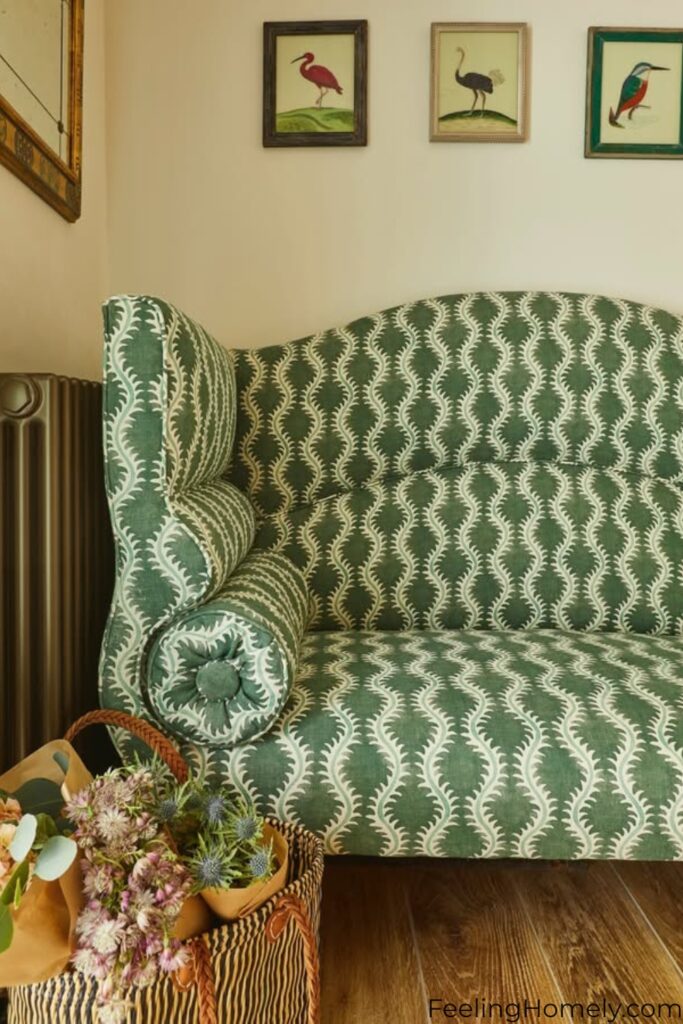
Buying a new sofa can get expensive really quickly, and honestly, a lot of older sofas are built better than many of the flat-pack ones you’ll find today. Solid frames, proper support, and craftsmanship you just don’t always get anymore. Reupholstering lets you keep all of that while giving your sofa a whole new look.
I also love that it’s a more sustainable choice. Instead of sending a perfectly good sofa to landfill, you’re giving it a second life and turning it into something you actually love again.
And the best part? You’re in complete control. You choose the fabric, the comfort level, the colours. You can make it work for your home, your style, and how you actually live.
If your sofa frame still feels sturdy and the springs are supportive, it’s absolutely worth saving. Most sofas don’t need replacing. They just need a little refresh to feel homely again. ✨
Tools and Materials You’ll Need
Before you start, gather everything in one place.
| Item | Purpose |
|---|---|
| Staple gun + heavy-duty staples | Attaching fabric |
| Upholstery fabric (2–4 yards) | New sofa covering |
| High-density foam | Cushion support |
| Polyester batting | Softens foam edges |
| Needle-nose pliers | Removing old staples |
| Screwdrivers | Taking sofa apart |
| Scissors or electric carving knife | Cutting foam |
| Measuring tape | Accurate sizing |
| Chalk or fabric marker | Labeling pieces |
| Hammer | Tapping stubborn staples |
Tip: Always buy slightly more fabric than you think you need. Matching patterns later is much harder than returning extra fabric.
Step 1 – Assess Your Sofa
Start by giving your sofa a proper inspection. Sit on it. Press into the cushions. Look underneath.
Ask yourself:
Are the cushions sagging?
Is the fabric torn or stained?
Does the frame creak or wobble?
Your goal is to identify what needs replacing. Most sofas only need new foam and fabric. If the frame is cracked or springs are broken, repair those first before moving on.
Step 2 – Remove the Old Fabric
Pull your sofa into a bright, open space. Turn it upside down and start removing staples with pliers. Work slowly and carefully. Every piece of fabric you remove becomes your template for the new upholstery.
Take photos as you go. Label panels with chalk or sticky notes so you remember where everything belongs. This step takes patience, but staying organised here makes reassembly much easier.
Step 3 – Replace the Foam (This Changes Everything)
Fresh foam is what gives your sofa that “new furniture” feel.
Here’s a simple foam guide:
| Foam Type | Firmness | Best For |
|---|---|---|
| High-density polyurethane | Firm | Seat cushions |
| Medium-density foam | Medium | Back cushions |
| Memory foam topper | Soft | Added comfort layer |
Measure your old foam carefully. Cut new foam to size using an electric knife or serrated blade. Wrap each piece in batting to soften edges and prevent sharp corners from showing through fabric. Slide foam into cushion covers or newly sewn covers if your originals don’t unzip.
Pro tip: For extra luxury, layer a thin sheet of memory foam on top of high-density foam.
Step 4 – Upholster With New Fabric
Lay your fabric right-side down and place your cushion or panel on top. Align the grain and patterns so everything looks intentional. Pull the fabric tight, fold corners neatly, and staple underneath or on hidden edges.
Work from the centre outward, smoothing wrinkles as you go. Don’t rush this part. Clean upholstery comes from slow, even tension.
Step 5 – Reassemble the Sofa
Once every piece is covered, start putting the sofa back together. Replace cushions, reattach dust covers underneath, and check alignment. Sit on it. Adjust tension if needed. Trim loose threads.
This is where you finally see the transformation.
Sofa Upgrade Time Guide
Paste this table into WordPress as a Table Block:
| Task | Difficulty | Time |
|---|---|---|
| Remove old fabric | Easy | 45–60 mins |
| Replace foam | Moderate | 1–2 hrs |
| Upholster cushions | Intermediate | 2–3 hrs |
| Upholster frame | Advanced | 3–5 hrs |
| Final styling | Easy | 15–30 mins |
Most projects can be done over a weekend.
Rough Cost Breakdown
| Item | Estimated Cost |
|---|---|
| Upholstery fabric | $50-$150 |
| Foam + batting | $40-$100 |
| Staple gun + staples | $20-$35 |
| Misc tools | $15-$25 |
Compared to buying a new sofa, this is a huge saving.
Common Mistakes to Avoid
I’ve learned this the hard way, so you don’t have to.
- Skipping photos during disassembly
Take loads. You’ll thank yourself later when you’re trying to remember what went where. - Cutting foam without measuring twice
Foam is expensive and it’s not forgiving. Measure, mark, then double-check before you cut. - Pulling fabric unevenly
Work in small sections and keep checking from different angles so you don’t end up with wrinkles or a wonky pattern. - Using low-density foam
It might feel fine at first, but it will flatten quickly and you’ll be back where you started. - Forgetting to label pieces
Label fabric panels, padding, and even “top/bottom” so you’re not guessing halfway through. - Rushing corners and seams
Corners are what make it look professional. Slow down here, fold neatly, and staple with intention.
Take your time. It’s the little details that make the finished sofa look polished and feel properly “new” again.
Styling Your Sofa After the Makeover
Once your sofa is finished, this is where the fun really starts.
I always like to add a few simple touches to make it feel styled, not just “done.” Pop on a couple of textured cushions in different sizes, then casually drape a soft throw over one arm (effortless, not folded perfectly 😌). Slide a neutral rug underneath to ground the space, and style a nearby coffee table with a small stack of books or a bit of greenery.
It doesn’t need to be complicated.
These little finishing touches are what turn your refreshed sofa into the heart of your living room. The place everyone gathers, relaxes, and makes new memories. That’s when it stops feeling like a DIY project… and starts feeling like home. ✨
Quick FAQs
How long does reupholstering take?
Usually 1–2 days depending on sofa size and experience.
Can beginners do this?
Yes. Start with cushions first to build confidence.
What fabric works best?
Upholstery-grade cotton blends, linen blends, or performance fabrics.
How long will new foam last?
High-density foam typically lasts 7–10 years.
Do I need a sewing machine?
Only if your cushions don’t already have removable covers.
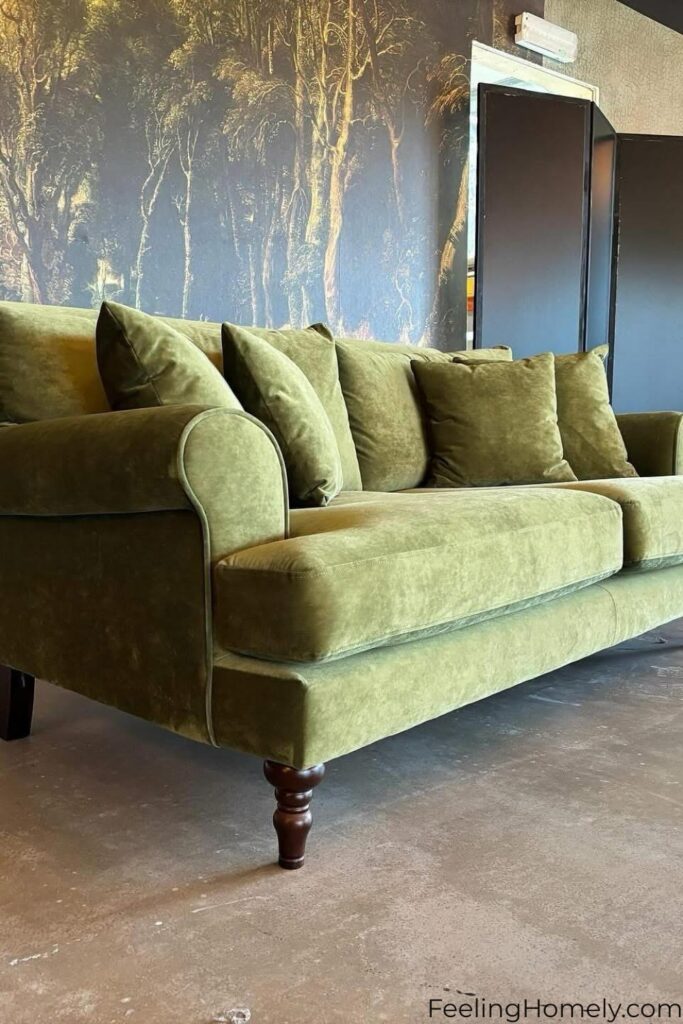
Final Thoughts
Reupholstering isn’t just about updating furniture. It’s about creating a home that feels intentional, warm, and truly yours.
There’s something really special about sitting down at the end of the day on a sofa you brought back to life yourself. It hits differently. You notice it more. You appreciate it more. It’s proof that even small DIY projects can completely change how your space feels.
So if you’ve been putting this off, take this as your sign. Your old sofa probably has plenty of life left in it, it just needs a little love.
And honestly? You’ll be so glad you did.
– Lexi x