How to Make Your Bedroom Feel Soft and Expensive in 6 Steps

You know that feeling when you walk into a bedroom and it just feels right? Calm, put-together, effortlessly pretty – like the kind of space you’d actually want to wake up in. ✨
The good news is that look isn’t about spending a fortune or starting from scratch. It’s more about a few intentional choices working together: softer colours, better bedding, warm lighting, and details that feel like you rather than a copy-paste from a catalogue.
This guide breaks it down into six simple steps. No full room overhauls, no unrealistic styling that only works for a photoshoot – just practical changes that make a real difference. Because let’s be honest, most of us aren’t making the bed perfectly every morning, and that’s absolutely fine. 🛏️
We’re going for soft, feminine, and quietly polished. The kind of room that feels lovely to be in, even when life’s a bit messy.
Step 1: Choose a Soft Base Palette
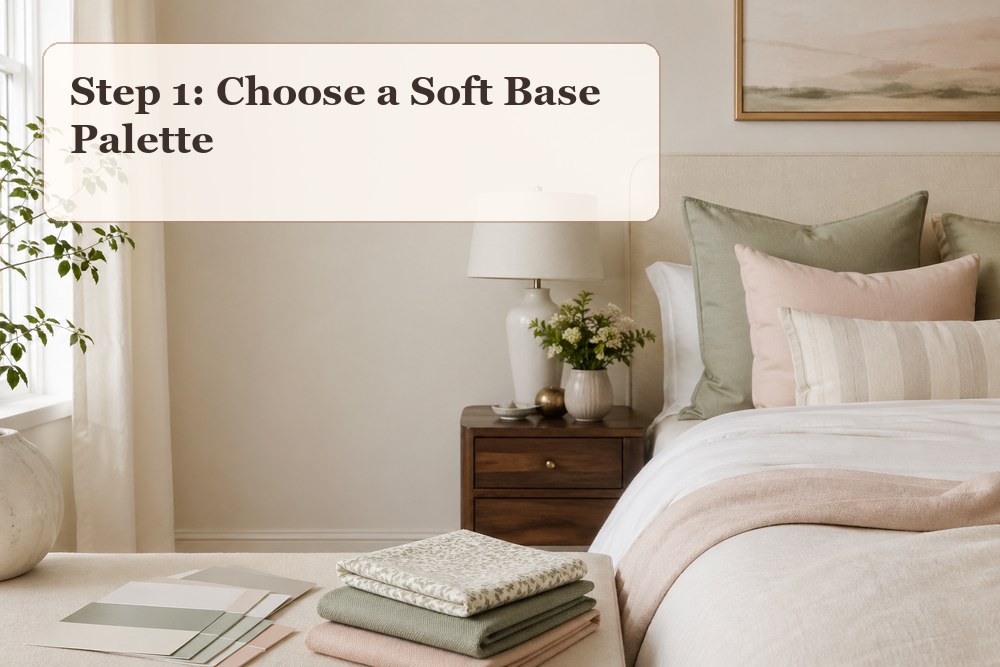
Start with the colors you see most: walls, bedding, curtains, floor, and large furniture. Expensive-looking bedrooms usually have a restrained base, even when they include pretty accents. Think warm white, ivory, oatmeal, mushroom, pale blush, soft sage, muted mauve, or a gentle greige. These shades make the room feel restful before you add a single cushion.
- Pick one main neutral for the largest surfaces.
- Add one soft accent color for bedding, art, or accessories.
- Use one grounding tone, such as walnut, antique brass, charcoal, or warm taupe.
If you tend to buy random pretty things and hope they get along, use the practical rule for how many colours to have in a room as your guardrail. It keeps the bedroom from becoming busy, which is where the expensive feeling often disappears.
Step 2: Layer the Bed Like a Boutique Hotel

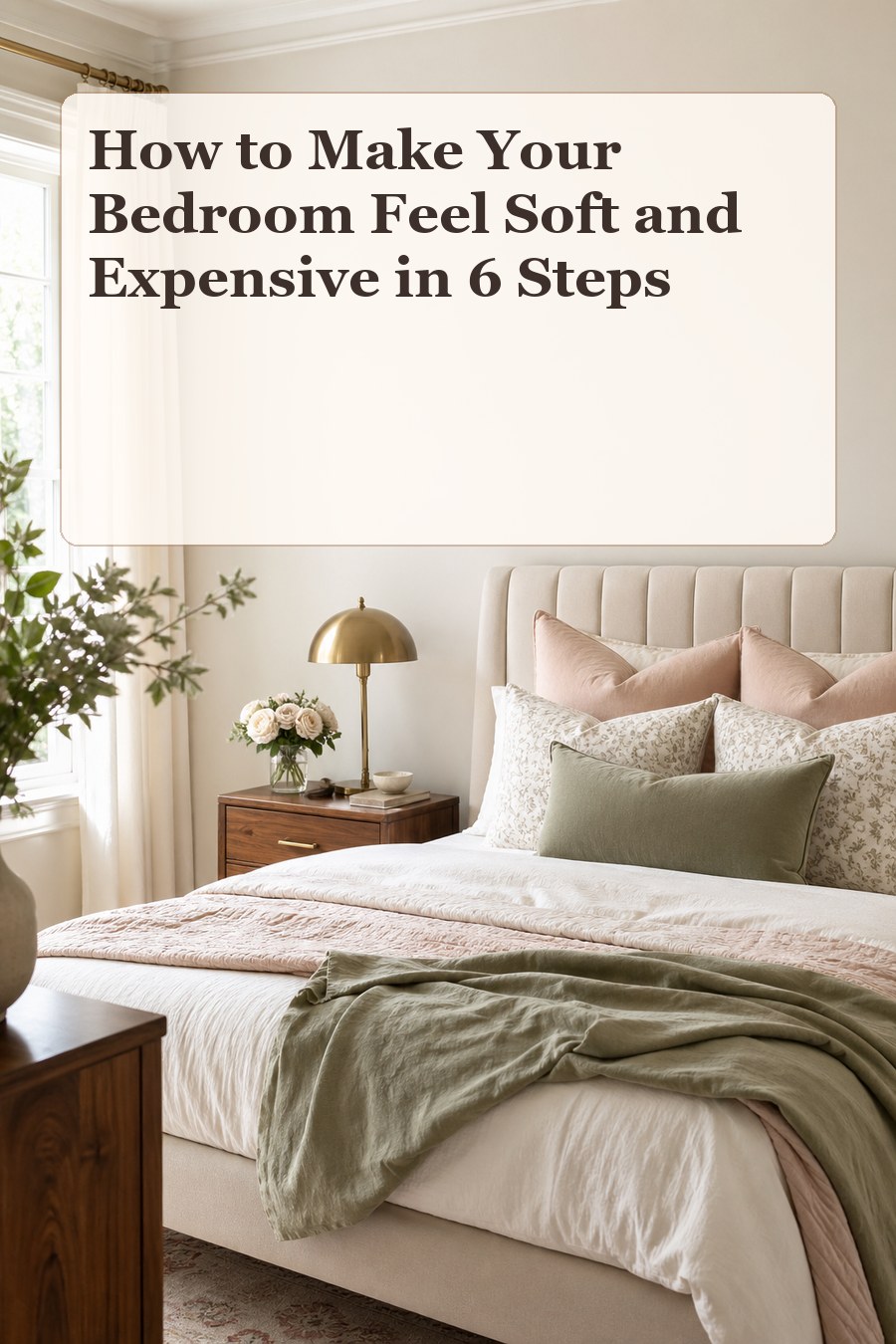
The bed is the main event, so let it earn the attention. You do not need ten pillows, but you do need layers with different weights. Start with smooth sheets, add a duvet or comforter, then fold a quilt, blanket, or throw across the lower third of the bed. That fold is small, but it instantly makes the bed look intentional.
- Use two sleeping pillows per side if the bed is queen or king size.
- Add two larger square pillows or euro shams behind them for height.
- Finish with one long lumbar cushion or two smaller decorative cushions.
The secret is restraint. Too many cushions can make a bedroom feel fussy rather than elegant, so borrow the same logic from sofa and bed cushion styling made simple: vary the size, repeat a color, and stop before the bed looks like a storage problem.
Step 3: Add Warm Lighting at Three Levels

Overhead lighting alone rarely flatters a bedroom. It can make even lovely bedding look flat. A softer, more expensive room usually has light at different heights: one overhead or ceiling source, one bedside source, and one low glow from a candle, diffuser lamp, picture light, or small table lamp.
Choose warm bulbs, ideally around 2700K, and avoid cold white lighting unless you enjoy getting ready in the atmosphere of a dentist’s waiting room. Matching bedside lamps are classic, but they do not have to be identical. They simply need to feel balanced in scale, finish, and warmth.
- Use fabric, ceramic, brass, glass, or stone bases for a softer finish.
- Choose lampshades that diffuse light rather than expose harsh bulbs.
- Put lamps on dimmers or smart bulbs so the room can wind down at night.
Step 4: Style a Pretty Bedside Moment
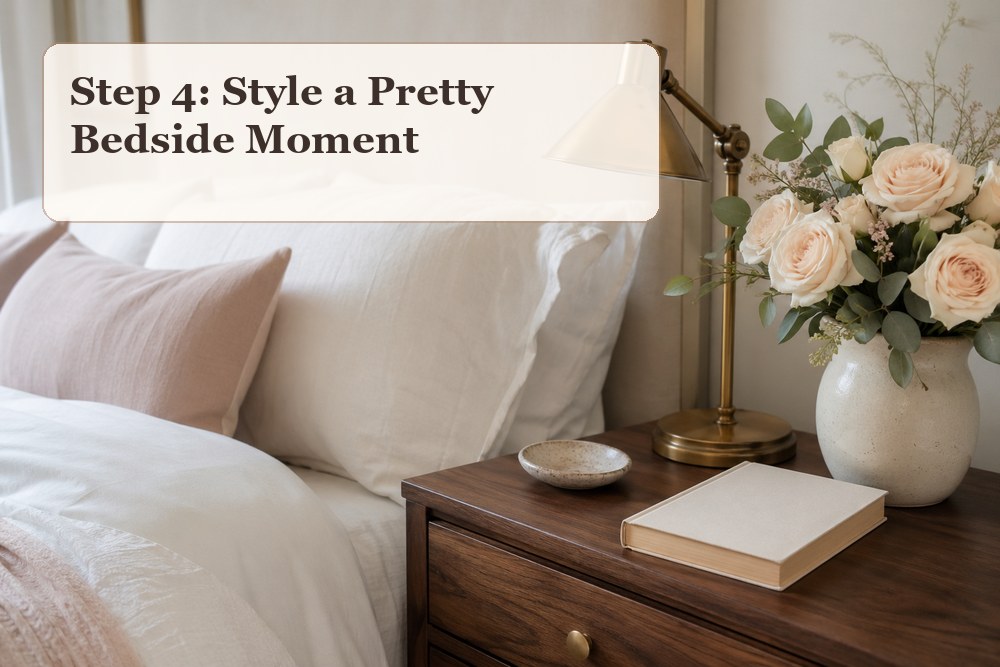
A bedside table is tiny, but it tells the whole room what mood it is in. Clear away the old receipts, spare hair ties, and three half-used hand creams. Keep what you genuinely use, then style the top with a lamp, a small dish, a book, and one living or sensory detail such as flowers, greenery, a candle, or a linen spray.
The goal is not perfection. It is a useful little scene that makes bedtime feel like a reset instead of a collapse. If your room is compact, choose a floating shelf, a narrow table, or a small chest with drawers. The same space-saving thinking behind choosing furniture for a small living room works beautifully beside the bed too: scale matters more than stuffing in the biggest piece.
Step 5: Bring in Texture with Rugs and Curtains
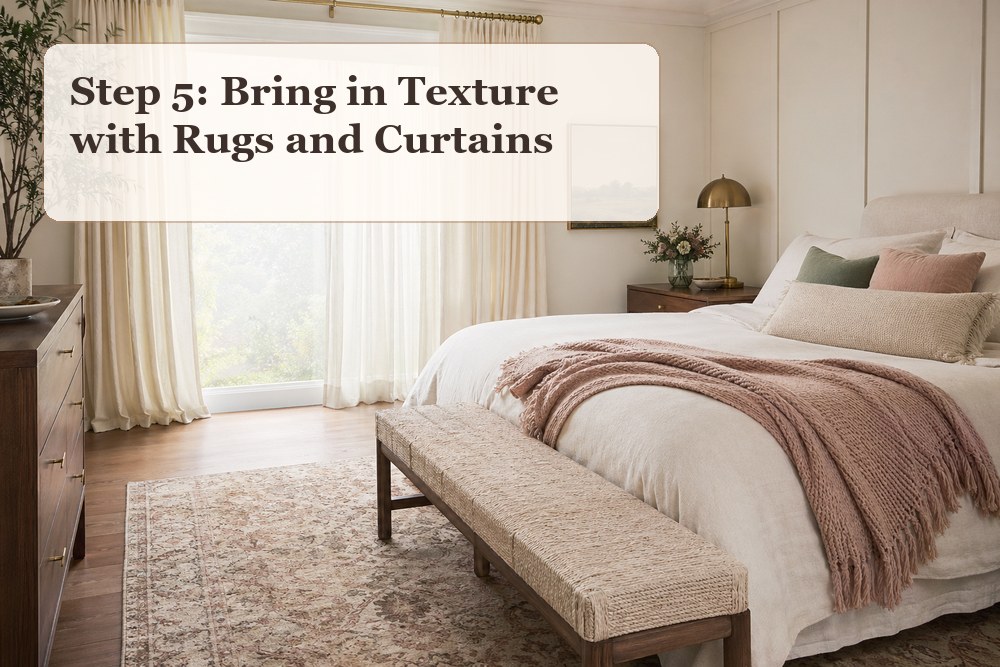
Softness is not only about color. It is also about what the room feels like under your hands and feet. Curtains, rugs, throws, upholstered furniture, and woven baskets add depth without shouting. If your bedroom currently feels a little plain, texture is usually the missing piece.
- Hang curtains high and wide so the window feels taller and more generous.
- Choose a rug large enough to sit under at least the lower two thirds of the bed.
- Mix smooth cotton, slubby linen, boucle, velvet, or woven wool in small amounts.
For a calm, cohesive look, repeat one or two tones across your textiles. Bathroom styling uses the same principle, which is why this guide to choosing towel and accessory colors for a calm space is surprisingly useful for bedrooms too. Soft rooms feel collected when the textiles are quietly speaking the same language.
Step 6: Finish with Personal Art and Scent
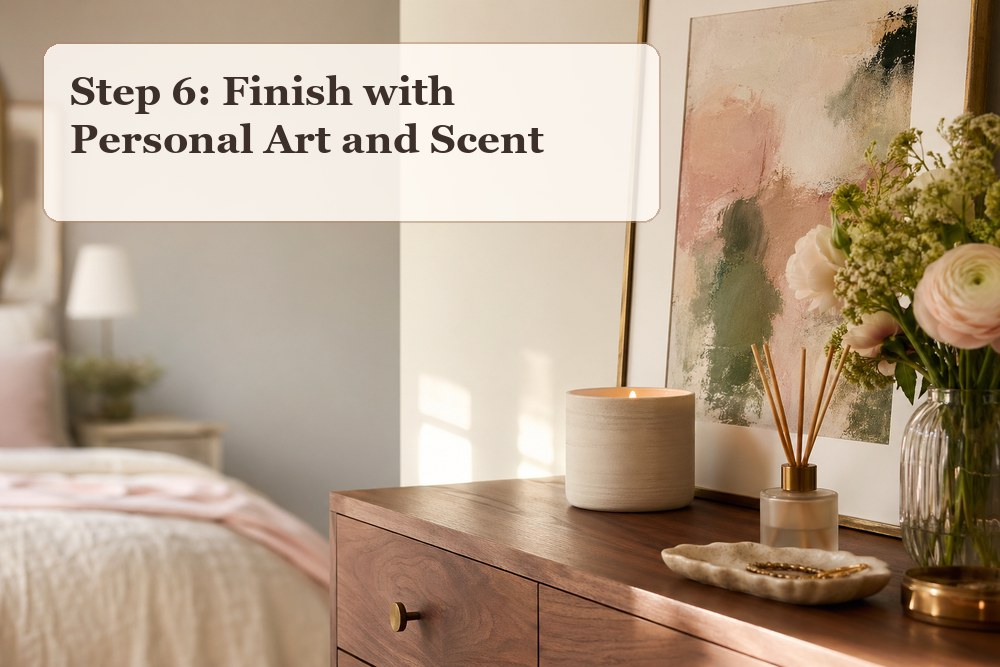
The final layer is what stops the bedroom from looking like a rental listing. Add art you actually like, a framed photo, a ceramic tray, a candle, a diffuser, or a little vase on the dresser. Personal does not have to mean cluttered. A few edited pieces can make the room feel intimate and grown-up.
If you want the room to feel expensive, leave some breathing space around these details. One framed print above a dresser can look calmer than a crowded gallery wall. One beautiful candle on a tray can feel more deliberate than six tiny objects lined up in panic. For seasonal warmth, take inspiration from cozy winter living room ideas and translate the mood with softer lighting, heavier textures, and warmer scents.
A Simple Bedroom Styling Checklist
- Keep the main palette quiet and repeat it across the room.
- Layer the bed with different weights, not just more pillows.
- Use warm lighting at more than one height.
- Make the bedside table useful, pretty, and uncluttered.
- Add curtains, a rug, and tactile textiles for softness.
- Finish with art, scent, and personal details that feel edited.
That is the whole formula: calm base, soft layers, warm glow, useful beauty, and a little personality. You do not need to buy everything new. Start with the bed, lighting, and one surface you see every day. Once those feel right, the rest of the room usually starts behaving.